Table of Contents
In 2025, the stakes are higher than ever. A website isn’t just a brochure; it is a dynamic business engine. It needs to load instantly to satisfy Google’s strict Core Web Vitals, it needs to be accessible to comply with new global regulations like the European Accessibility Act (EAA), and it needs to be flexible enough to pivot when your business strategy changes. This guide cuts through the marketing noise to help you find that balance, focusing on long-term value, data ownership, and technical scalability.
Key Takeaways
- Ownership is Paramount: The most critical trade-off in 2025 is between the convenience of a “walled garden” (SaaS) and the ownership of open-source platforms. You must decide if you want to rent your digital presence or own it.
- Performance is Non-Negotiable: Core Web Vitals (INP, LCP, CLS) and hosting infrastructure are now as critical as design tools for SEO and user retention. A fast builder on slow hosting is a failed project.
- The Rise of the “Platform”: The industry has shifted from simple “page builders” to comprehensive “website builder platforms” that integrate hosting, AI, marketing, and accessibility into a unified workflow.
- AI as a Workflow Accelerator: The best tools don’t just generate generic sites; they act as strategic partners (Agentic AI), automating planning, coding, and content creation to multiply your productivity.
- Scalability Wins: A tool that looks easy today must not become a bottleneck tomorrow. The ability to extend functionality via plugins or custom code is essential for long-term success.
The Evolution of Web Creation: From Code to Platforms
To truly understand what constitutes the “best” website builder today, we have to look at the trajectory of the industry. The goal has always been democratization—making it easier for more people to build better things—but the definition of “easier” has fundamentally shifted.
The Early Era: The Developer Monopoly
In the early days of the web, business owners faced a binary choice. You could hire a developer to hand-code HTML and CSS, which offered total control but required a high budget and a high skill barrier. Or, you could use a rigid Content Management System (CMS) like early WordPress. While these systems offered structure for blogging, they provided very little design freedom without heavy backend development. This created a significant divide: developers held the keys to the kingdom, and designers or business owners were reliant on them for every minor text change, color tweak, or layout adjustment.
The Rise of the “Walled Garden” SaaS
Then came the first generation of drag-and-drop SaaS (Software as a Service) builders. These platforms promised that anyone could build a website in an afternoon. They succeeded by bundling everything—hosting, domain, software, security, and support—into a single monthly subscription. The user experience was smooth, but the trade-off was significant: you didn’t own your site. You rented it.
If you stopped paying, your site disappeared. If you wanted a specific feature they didn’t build, you were out of luck. If they raised prices, you had no leverage. This model works for hobbyists, but for serious businesses, it introduces a layer of risk that is hard to justify in the long term.
The Modern Paradigm: The Managed Open Platform
Today, we are seeing the convergence of these two worlds. The “best” website builder in 2025 is one that offers the visual, drag-and-drop intuition of a SaaS tool but is built on an open-source foundation that guarantees data ownership and limitless extensibility.
We are no longer looking for just a tool to place images and text. We are looking for a Website Builder Platform—an ecosystem that handles the “boring” infrastructure (hosting, security, delivery) while empowering the user with “agentic” AI and professional design capabilities. This “Managed Open Source” approach is the new gold standard for professionals who refuse to compromise.
Defining “Best” – The 5 Pillars of Evaluation
When we ask, “What is the best website builder?”, the answer is subjective unless we apply objective criteria. As an expert who has built hundreds of sites, I evaluate every tool against these five non-negotiable pillars.
1. Creative Freedom vs. Template Rigidity
Most builders claim “total design freedom,” but they often mean “freedom within our pre-defined grid.” True creative freedom means pixel-perfect control over every viewport and every element.
- Layout Engines: Does the builder use modern CSS Flexbox and Grid containers? These allow for complex, responsive layouts—like nested columns, sticky sidebars, or intricate bento grids—that adapt fluidly to any screen size, rather than just stacking blocks on top of each other.
- Global Design Systems: Can you set global rules for typography, colors, and button styles that update across the entire site instantly? This is crucial for maintaining brand consistency as you scale from 5 pages to 500.
- The Blank Canvas: The best builders allow you to start with a blank canvas (like the Hello Theme) and build a bespoke identity, rather than forcing you to look like thousands of other sites using the same template.
2. Performance and Core Web Vitals
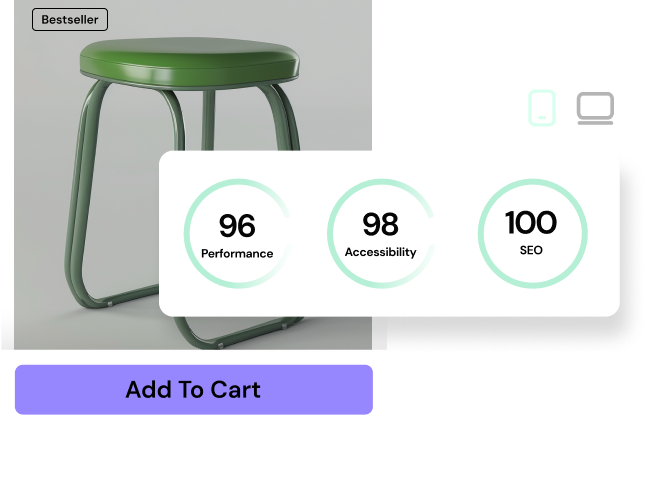
In 2025, a pretty website that loads slowly is a failed website. Google’s Core Web Vitals (CWV)—specifically Largest Contentful Paint (LCP), Interaction to Next Paint (INP), and Cumulative Layout Shift (CLS)—are critical ranking factors.
- SaaS Builders: Often struggle here because their code is bloated with generic features you might not use, and you cannot access the server to optimize it. You are at the mercy of their global infrastructure.
- Professional Platforms: Prioritize clean code output and integrated performance tools. For instance, features like Image Optimizer should be native to the workflow, compressing assets automatically to WebP or AVIF formats without needing third-party plugins.
- Infrastructure: The builder is only half the equation. The hosting environment must be optimized for the specific software. Generic shared hosting often bottlenecks performance, regardless of how efficient the builder is.
3. Data Ownership and Portability
This is often overlooked until it’s too late. If a platform raises its prices by 300% (which has happened in the SaaS world), can you pick up your site and move it to a different host?
- Closed Systems (Walled Gardens): No. You are locked in. You can usually export your blog posts as a CSV, but your design, your logic, your customer data structure, and your SEO schema are tied to their proprietary software. Re-platforming means rebuilding from scratch.
- Open Systems: Yes. Solutions built on WordPress allow you to take your database and files anywhere. This “portability” is your insurance policy. You own the asset you are building.
4. The Ecosystem and Extensibility
No single company can build every feature you will ever need. You might need a specific booking system for a pilates studio, a complex table reservation system for a restaurant, or a specific real estate listing integration (IDX).
- The Plugin Economy: The best website builder is one that integrates with a massive library of third-party tools. This is why the WordPress ecosystem remains dominant; if you can dream it, there is likely a plugin for it.
- API Access: For advanced users and agencies, having access to an API to build custom integrations is essential. Closed builders rarely offer this level of access.
5. Cost Efficiency at Scale
Entry-level prices are deceptive. Many builders hook you with a low monthly fee, but as soon as you need “advanced” features like removing ads, adding eCommerce, or accessing analytics, the price triples. A professional evaluation looks at the Total Cost of Ownership (TCO) over three years.
- Hidden Costs: Transaction fees on sales (often 2-3% on top of credit card fees), charges for “premium” apps, and forced upgrades for storage or bandwidth.
- Value Bundling: The best platforms bundle essential services—hosting, pro builder features, backups, and security—into a transparent price that scales predictably with your business.
The Current Landscape: An Overview
To make an informed decision, we must look at the major players in the market.
The All-in-One SaaS Builders (Wix, Squarespace)
These platforms are characterized by a closed architecture. They provide the hosting, the builder, and the support in a single package.
- The Philosophy: Simplicity over flexibility. The goal is to get a site up quickly with minimal technical friction.
- The User Experience: Users typically select a template and modify it using a drag-and-drop editor. The interface is often “what you see is what you get” (WYSIWYG).
- Limitations: The underlying code is inaccessible. Users cannot install third-party software that hasn’t been approved or built by the platform. This makes them excellent for simple brochure sites but potentially limiting for complex functionality or high-growth businesses.
The Visual Design Tools (Webflow)
Webflow positions itself as a tool for designers who want to export code. It uses a visual interface that closely mirrors CSS properties (margin, padding, flexbox).
- The Philosophy: Visual coding. It abstracts the code into visual controls but requires an understanding of web design principles (box model, classes, hierarchy).
- The User Experience: The interface is sophisticated and resembles professional design software like Adobe or Figma.
- Limitations: It has a steeper learning curve than standard drag-and-drop builders. While powerful for frontend design, its CMS and eCommerce capabilities are often considered less robust than dedicated database platforms. It also operates as a closed garden regarding hosting.
The CMS Giants (Traditional WordPress)
WordPress powers over 40% of the web. It is open-source software that you install on a hosting server.
- The Philosophy: Democratization and extensibility. It is a database-driven platform where content is separated from design.
- The User Experience: Traditionally, it relied on a backend dashboard and a rigid theme system. Without a page builder, customization required PHP and CSS knowledge.
- Limitations: The “fragmentation” issue. Users often have to piece together a host, a theme, and various plugins from different developers. This can lead to security vulnerabilities or “plugin conflicts” if not managed correctly.
The Convergence: The “Managed Open Source” Solution
As we analyze the landscape, a clear gap emerges. Users want the reliability, speed, and integrated support of a SaaS (like Wix), but they demand the freedom, ownership, and power of open-source WordPress. They want the best of both worlds.
This is where Elementor has strategically positioned itself, evolving from a simple plugin into a comprehensive Website Builder Platform.
Solving the Fragmentation Problem
For years, the main argument against WordPress was that it was “messy.” You had to buy hosting from Company A, a theme from Company B, and a builder from Company C. When the site broke, Company A blamed Company B.
Elementor solves this by unifying the stack. By offering Elementor Hosting, they provide a managed environment that is specifically tuned for the builder. This creates a SaaS-like experience—one account, one login, one support team—while the underlying engine remains open-source WordPress. You get the stability of a walled garden with the infinite potential of the open web.
The Strategic Advantage
According to Itamar Haim, an expert in web development strategy, “The future belongs to platforms that can abstract away the technical complexity of the server while leaving the creative capability of the browser completely open.” This is the definition of the best website builder in 2025: Managed Open Source.
Deep Dive into the Elementor Ecosystem
To understand why this platform approach is superior, we need to dismantle the ecosystem and look at the components. A truly great builder is not just a drag-and-drop interface; it is a suite of connected tools that handle every stage of the lifecycle: Plan, Build, Host, and Grow.
The Creative Engine: The Editor
At its core, the Elementor Website Builder is a visual design engine. Unlike block-based editors that feel clunky, or template-based editors that feel restrictive, Elementor uses a “live” editing model.
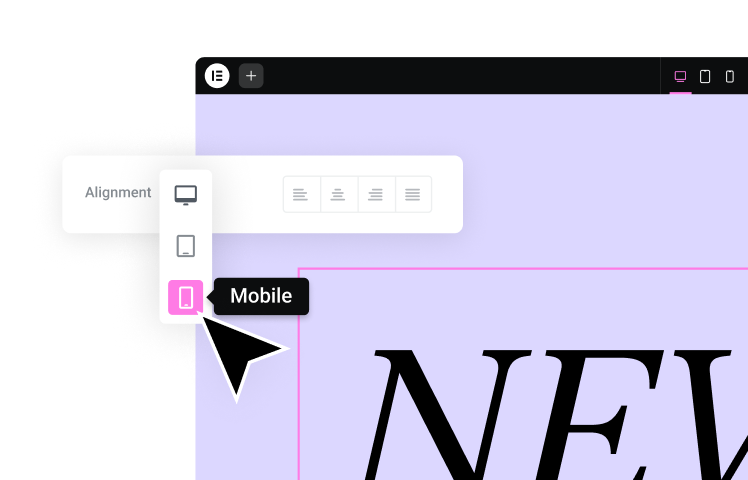
Granular Control & Flexbox: You aren’t just placing an image; you are controlling its border radius, its box shadow, its motion effect on scroll, and its absolute position on mobile vs. desktop. The integration of Flexbox Containers and CSS Grid empowers designers to build complex layouts—like nested columns, sticky sidebars, or intricate grids—without writing code. This is the difference between “decorating” a template and “architecting” a layout.
The Theme Builder: This is a key differentiator for professionals. In the past, you needed a developer to change the layout of your blog archive or your 404 page. With Elementor Pro, you can visually design your Header, Footer, Single Post templates, and Search Results pages. You are building the structure of the site, not just the content inside it.
Dynamic Content: This is where Elementor creates a significant gap between itself and standard SaaS builders. You can design a “Single Product” template and dynamically pull in the Product Image, Price, and Description from the database. This means you design the layout once, and it applies to 1,000 products. If you want to change the font size of the price, you change it in one place, and it updates everywhere.
The Foundation: Managed Hosting
A Ferrari engine in a golf cart won’t win a race. A powerful builder on cheap shared hosting will result in a slow, frustrating site. Elementor Hosting is built on the Google Cloud Platform, utilizing their C2 (Compute-Optimized) virtual machines.
Why this matters: Most budget hosts put you on crowded servers where your site competes for resources. Elementor’s infrastructure is isolated and scalable. It includes:
- Cloudflare Enterprise CDN: Every site is automatically connected to Cloudflare’s premium network. This means your heavy images and CSS files are served from a server closest to your visitor, whether they are in Tokyo or Toronto. This drastically improves First Contentful Paint (FCP) scores.
- Security Built-In: It includes enterprise-grade security features like a Web Application Firewall (WAF), DDoS protection, and automated daily backups. You don’t need to install extra security plugins; the platform handles it.
- Unified Support: If your site goes down, you don’t call a random hosting company who blames your builder. You contact Elementor, and because they control both the software and the server, they can debug issues instantly.
The AI Workflow: From Strategy to Code
AI in web design is often a gimmick—generating weird text or hallucinated images. Elementor has integrated AI as a workflow accelerator that acts more like a partner than a toy.
AI Site Planner: Before you even open the editor, you can use this tool to generate a sitemap and a wireframe. It acts as a digital strategist. If you tell it you are building a site for a “Dentist in Chicago,” it understands that you need a “Services” page, a “Book Appointment” page, and a “Patient Testimonials” section. It generates the structure for you, saving hours of planning time.
Contextual Generation: Inside the editor, Elementor AI helps you write copy that fits the specific design container. It can translate that copy into 25 languages instantly, maintaining the layout integrity. This is “context-aware” AI.
Agentic Capabilities: We are moving toward “Agentic AI” with tools like Angie. Unlike generative AI that just creates text, Agentic AI can perform multi-step actions within the WordPress environment. Imagine telling your assistant, “Check all pages for broken links and fix them,” or “Create a landing page based on this PDF.” This level of automation turns a website builder into a productivity multiplier.
Code Assistant: For the 1% of things the visual builder can’t do, there is the “Custom CSS” area. You don’t need to know CSS. You can simply ask the AI, “Make this button pulse with a neon glow on hover,” and it will write and insert the code for you.
eCommerce Capabilities: The WooCommerce Builder
Building an online store is high-stakes. You need reliability, speed, and conversion optimization.
The Problem: Platforms like Shopify are excellent but charge transaction fees and limit checkout customization unless you pay for expensive “Plus” plans.
The Solution: The WooCommerce Builder allows you to customize every aspect of the shopping experience. You can design a custom “Add to Cart” slide-out, a custom “My Account” page, and a custom checkout flow. This allows you to create a unique brand experience rather than a generic store. Combined with Ecommerce Hosting, you get the robustness of a dedicated store without the monthly overhead of SaaS transaction fees. You keep your margins.
Marketing and Growth Integration
A website is an island without marketing. The “best” builder must help you grow.
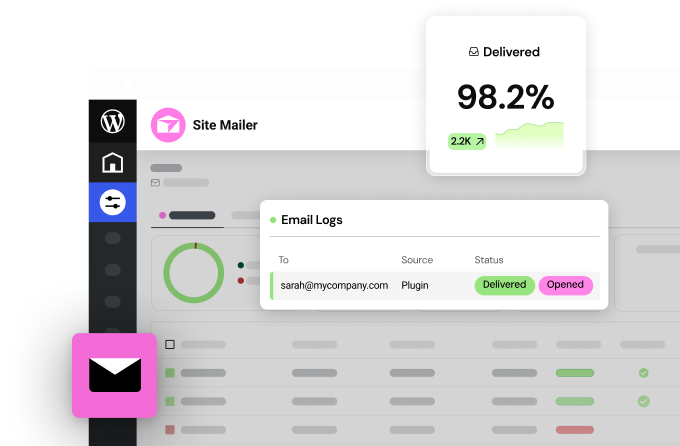
Site Mailer: One of the biggest pain points in WordPress is that emails (like contact form notifications) often go to spam because hosting servers aren’t optimized for email delivery. Site Mailer fixes this by reconfiguring the PHP mail function without complex SMTP setups. It ensures that when a potential customer fills out your contact form, you actually get the lead.
Send by Elementor: (Note: “Send” refers to the marketing solution). This integrates email marketing directly into the dashboard. You can capture a lead using an Elementor popup and immediately trigger an automation sequence—sending a welcome email, a discount code, or a downloadable PDF—all within the same ecosystem. This replaces the need for expensive external tools like Mailchimp or Klaviyo for many users.
Image Optimizer: Speed is marketing. This native tool automatically compresses images and converts them to next-gen formats (WebP/AVIF). It ensures your site remains fast, which improves your Google Quality Score for ads and your SEO ranking.
Accessibility and Compliance
In 2025, accessibility is a legal requirement in many regions (EAA, ADA). Ignoring this is a liability. Ally Web Accessibility is an integrated AI tool that scans your site for violations. It doesn’t just give you a checklist; it offers an “Assistant” to help fix contrast issues, add missing ARIA labels, and ensure your site is navigable by keyboard. This native integration saves you from expensive third-party accessibility audits and helps you build a more inclusive web.
Specific Use Cases – Who is the “Best” For?
“Best” is relative to your needs. Let’s look at three distinct personas and how the platform adapts to them.
The Small Business Owner (DIY)
- The Need: Speed, simplicity, and a professional look without a degree in design.
- The Solution: The Hello Biz theme.
- Unlike the standard “Hello” theme which is a blank canvas, “Hello Biz” provides a guided setup. It’s a “batteries included” approach.
- Combined with the Elementor Library of Kits, a business owner can import a full “Lawyer” or “Gym” website structure in one click, then use the visual editor to simply swap text and images.
- Verdict: This rivals the ease of use of Wix but leaves the door open for future growth. You aren’t locking yourself into a beginner tool; you are just using a beginner-friendly interface on a pro platform.
The Marketing Agency
- The Need: Workflow efficiency, client management, and scalability.
- The Solution: Elementor Pro + Management Tools.
- Agencies can use the “Notes” feature to collaborate with clients directly on the canvas (like Google Docs comments for a website).
- They can create a “Design System” and export it as a blueprint to use across 50 different client sites, ensuring consistency and speed.
- Verdict: The ability to resell hosting and maintenance services makes this a profit center, not just a tool. The unified dashboard allows agencies to manage hundreds of sites from one login.
The Designer / Creative Professional
- The Need: Zero constraints. The website must match the Figma file exactly.
- The Solution: Elementor for Designers.
- With features like Flexbox Containers and CSS Grid controls, designers are not limited by rows and columns. They can overlap elements, create complex scroll-based animations (Motion Effects), and use SVGs.
- Verdict: It offers the visual precision of Webflow but with the massive plugin library of WordPress, allowing you to say “yes” to any client request.
The Importance of a “Clean” Start
One of the secrets to building the best website is starting with the right foundation. Many users make the mistake of choosing a “bloated” theme from a marketplace that comes pre-loaded with six different sliders and a portfolio plugin you don’t need. This code loads on every page, slowing down your site even if you don’t use it.
The best practice in 2025 is to use a lightweight framework. The Hello Theme is the gold standard here. It strips away all the non-essential styling and scripts, giving you a 100% clean slate. This ensures that the only code loading on your site is the code you actually put there. This “minimalist foundation” strategy is key to achieving green scores in Google PageSpeed Insights.
When you pair a lightweight theme with Image Optimizer, you are effectively future-proofing your site. The optimizer automatically converts uploaded media to next-gen formats, resizing them for different viewports. This ensures that a mobile visitor never downloads a 4K desktop hero image, saving bandwidth and improving load times.
Beyond the Build – Marketing and Optimization
The job isn’t done when you hit “Publish.” The best website builder must also be a marketing engine. A pretty site that doesn’t convert is just digital art.
Lead Capture and Conversion
Most builders require you to pay extra for a popup plugin. A robust platform includes this natively. The Elementor Popup Builder is not just for collecting emails; it’s a conversion optimization tool. You can set “Exit Intent” triggers (showing a discount when a user moves their mouse to leave) or “Inactivity” triggers. Because it is native, it doesn’t slow down the site like third-party scripts often do.
Free Assets to Start
Budget is often a constraint, especially for startups. The best platforms lower the barrier to entry. For example, you can get a Free Download of the core builder to test the waters. Furthermore, many hosting plans now bundle a Free Domain Name for the first year, further reducing the initial CapEx for a new project.
Comparison Summary
To help visualize the landscape, let’s look at how the “Website Builder Platform” compares to other categories.
Flexibility
- SaaS (Others): Low. You can only move elements where the grid allows.
- Elementor: Unlimited. Absolute positioning, Z-index control, Custom CSS.
Portability
- SaaS (Others): None. You cannot export your site code.
- Elementor: High. It’s standard WordPress. You can migrate to any server.
Learning Curve
- No-Code Design Tools: Steep. Requires knowledge of HTML/CSS logic.
- Elementor: Moderate. Intuitive for beginners, deep for pros.
Ecosystem
- SaaS (Others): Limited App Market.
- Elementor: 60,000+ WordPress Plugins.
Frequently Asked Questions (FAQ)
1. What is the difference between a page builder and a website builder?
A page builder (like the free version of Elementor) allows you to design the content area of a single page—the text, images, and layout between the header and footer. A website builder (like Elementor Pro) gives you control over the entire website structure, including the Header, Footer, 404 pages, Archive pages, and Popups. It creates the global system, not just the individual page.
2. Is Elementor good for SEO?
Yes, absolutely. Elementor generates clean HTML5 code. However, SEO is largely determined by your hosting performance and content. By using Elementor Hosting (which runs on Google Cloud) and the native Image Optimizer, you address the technical side of SEO (speed and Core Web Vitals) right out of the box.
3. Do I need to know how to code to use Elementor?
No. The core functionality is entirely drag-and-drop. You can build award-winning websites without writing a single line of code. However, if you do know code (CSS, HTML, PHP), Elementor is developer-friendly and allows you to extend its functionality. Features like the AI Code Assistant also bridge the gap, writing custom snippets for you.
4. Can I build an online store with Elementor?
Yes. Elementor integrates deeply with WooCommerce, the world’s most popular eCommerce platform. The WooCommerce Builder allows you to custom-design your Single Product templates, Cart, and Checkout pages, giving you a level of brand control that standard Shopify themes often lack.
5. Is Elementor Hosting better than Bluehost or SiteGround?
“Better” depends on your needs, but Elementor Hosting offers a unique advantage: it is “Managed Hosting” specifically tuned for Elementor. The memory limits, PHP workers, and caching rules are pre-configured to make the builder run smoothly. This eliminates the common “white screen of death” or memory errors users sometimes face on generic shared hosting.
6. What happens if I stop paying for Elementor Pro?
This is a crucial ownership question. Unlike SaaS platforms where your site disappears, with Elementor, your site remains live. You own the code. You simply lose access to updates, premium support, and the ability to edit the Pro widgets. The existing Pro widgets on your live site will continue to look and function as they did. This is a massive advantage of the open-source model.
7. How does the AI Site Planner help agencies?
The AI Site Planner significantly reduces the “discovery” phase of a client project. Instead of spending days going back and forth on what pages are needed, the AI generates a professional sitemap and wireframe structure in minutes. This can be used as a visual proposal to get client buy-in faster, accelerating the timeline to the actual build.
8. Is Elementor secure?
Security is a layered approach. The plugin itself is updated frequently with security patches. However, security is mostly a hosting responsibility. Elementor Hosting includes enterprise-grade security features like a Web Application Firewall (WAF), DDoS protection, and automated daily backups, providing a security posture that is difficult to achieve with cheap shared hosting.
9. Can I migrate my Wix or Squarespace site to Elementor?
There is no “one-click” button because the underlying technologies are fundamentally different. However, the migration is often worth the effort for the long-term benefits of ownership and lower TCO. You would typically rebuild the design in Elementor (which is fast using the visual editor) and copy-paste your content. There are also third-party migration services that can automate the transfer of blog posts and images.
10. Why should I use the Hello Theme?
The Hello Theme is the “canvas” for your Elementor masterpiece. It is stripped of all bloat, ensuring that your site loads as fast as possible. It avoids the common issue where a theme’s styles conflict with the builder’s styles. Using Hello ensures that 100% of your design decisions are made in Elementor, creating a streamlined and conflict-free workflow.
Conclusion
The question “What is the best website builder?” ultimately leads to a choice between renting and owning.
In 2025, the allure of closed SaaS platforms is understandable—they offer a quick fix. But a website is a long-term asset. As your business grows, you will likely encounter the walls of the “walled garden.” You might need a specific integration, a custom checkout flow, or better performance optimization that the platform simply doesn’t allow.
The Elementor ecosystem represents the maturity of the market. It proves that you don’t have to choose between the ease of use of a visual builder and the power of open-source. By combining a pixel-perfect Website Builder with managed Elementor Hosting and a suite of AI and marketing tools, it offers a “Website Builder Platform” that scales with you.
For the freelancer, it’s a career-building tool. For the agency, it’s a scalability engine. And for the business owner, it’s the peace of mind that comes from knowing you truly own your digital presence.
If you are ready to start building on a platform that offers the best of both worlds, you can explore the Elementor Library for inspiration or grab the Free Download to experience the freedom of open web creation today.
Looking for fresh content?
By entering your email, you agree to receive Elementor emails, including marketing emails,
and agree to our Terms & Conditions and Privacy Policy.